


Your cart is currently empty!

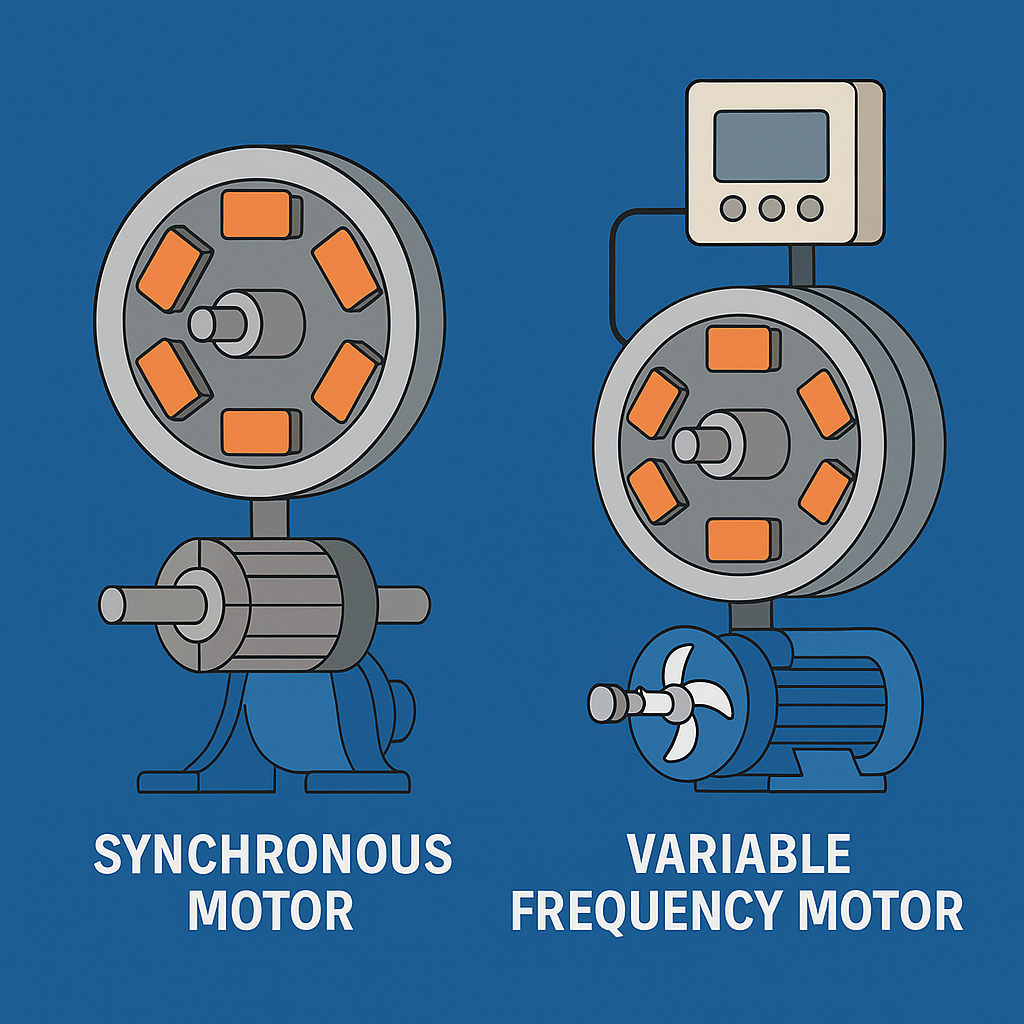
When shopping for a home water pump, one of the most common questions we hear is:
👉 What’s the difference between a synchronous motor and a variable frequency motor (VFD)?
👉 And which one should I choose for my family?
Let’s break it down in simple terms.
What Is a Synchronous Motor?
A synchronous motor runs at a fixed speed that’s locked to the grid frequency.
- In most countries, the grid runs at 50 Hz.
- That means a two-pole motor spins at ~3000 RPM and a four-pole motor spins at ~1500 RPM.
- The speed does not change unless the grid frequency changes (which rarely happens).
✅ Advantages:
- Simple structure
- Lower cost
- Durable and reliable
❌ Limitations:
- Fixed speed (no adjustment for water demand)
- Can cause unstable water pressure
Example:
You’re enjoying a nice shower, but then someone in the kitchen turns on the tap. Suddenly, the water pressure drops and your shower temperature fluctuates. That’s the typical downside of a synchronous motor pump.
What Is a Variable Frequency Motor (VFD)?
A variable frequency motor uses an inverter to adjust the frequency of the power supply, which means it can change its speed on demand.
✅ Advantages:
- Adjusts motor speed based on water use
- Keeps water pressure stable
- Saves energy by slowing down during low demand
❌ Limitations:
- Higher upfront cost
- More complex, which can mean pricier repairs
Example:
When water use is low, the motor slows down to maintain steady pressure.
When water use is high—say the shower, kitchen, and washing machine are all running—the motor speeds up to keep pressure stable everywhere.
The result? A consistent, comfortable water experience no matter how many taps are on.
Side-by-Side Comparison
| Feature | Synchronous Motor | Variable Frequency Motor |
|---|---|---|
| Speed | Fixed | Adjustable |
| Water Pressure | Unstable | Stable |
| Energy Efficiency | Standard | High (saves energy) |
| Cost | Lower | Higher |
| Reliability | High | High (but more complex) |
Easy Analogy
Think of it like bicycles:
- Synchronous motor = a traditional bike with one gear. You can ride it, but uphill or downhill, the effort is always the same.
- Variable frequency motor = a modern e-bike with smart gears. It adjusts automatically so you always feel comfortable.
Which Pump Should You Choose?
- ✅ Choose synchronous motor if your household is small, water usage is simple, and you don’t mind occasional pressure changes. It’s affordable and reliable.
- ✅ Choose variable frequency motor if your family often uses water simultaneously and you want a consistent showering experience. Though it costs more upfront, the comfort and energy savings make it worthwhile in the long run.
Final Takeaway
Synchronous motors save money. Variable frequency motors save headaches.
- Want simple and affordable? Go synchronous.
- Want comfort, stability, and energy savings? Go variable frequency.
💧 At EIIMAN we offer both options to match your needs. If you’re not sure which pump is right for your home, our team is here to help you decide.
Leave a Reply