


Your cart is currently empty!

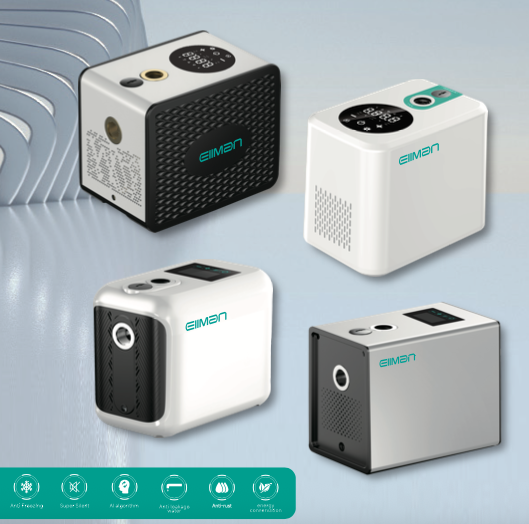
When choosing a water pump today, energy efficiency and long-term reliability are more important than ever. Two major technologies dominate the market: induction variable frequency motors and permanent magnet variable frequency motors. While both can work with a variable frequency drive (VFD) to control speed, their performance, efficiency, and suitability for different applications vary significantly.
In this article, we’ll break down how these two types of motors work, their advantages and disadvantages, and why permanent magnet motors are often the smarter choice for household water systems.
1. How They Work
Induction motors rely on electromagnetic induction to make the rotor spin. The stator creates a rotating magnetic field, which induces current in the rotor. This current generates its own magnetic field, and the interaction makes the rotor turn. This process always involves a small “slip” between the rotor and the magnetic field.
Permanent magnet motors, on the other hand, have magnets built directly into the rotor. They don’t need induction to generate a magnetic field. As a result, there’s virtually no slip, and the motor operates more efficiently.
2. Energy Efficiency
Induction motors typically have efficiencies in the 85–93% range. A portion of the input energy is lost as rotor heat (called rotor copper loss).
Permanent magnet motors can reach 95–97% efficiency, especially at partial loads. Because the rotor doesn’t need to generate a magnetic field, almost all input power goes toward actual mechanical work.
In continuous operation environments such as municipal pumping stations or high-rise building supply systems, this difference in efficiency translates into significant energy savings over time.
3. Control Performance
Both motor types can be paired with a VFD for smooth speed control. However, permanent magnet motors offer better low-speed performance. They deliver high torque at low speeds and respond faster to changes in demand, which is ideal for variable flow systems — for example, when water usage drops at night and rises during the day.
Induction motors also work well, but their efficiency drops at low speeds, and their response is slightly slower.
4. Cost and Maintenance
Induction motors are well-established, cost-effective, and easy to maintain. They have a long track record of reliable operation in all kinds of environments.
Permanent magnet motors are more expensive due to the use of rare-earth magnetic materials. There is also a potential risk of demagnetization at high temperatures or under severe overcurrent conditions. Their control systems are more sophisticated, but they offer higher long-term efficiency and lower operating costs.
5. Household Applications: Why Permanent Magnet Wins
In residential water supply systems, the motor often operates at lower speeds and experiences frequent start-stop cycles. For example, when someone opens a faucet for a short time, the pump must start quickly, run briefly, and stop again.
This is exactly where permanent magnet motors excel.
- They deliver strong torque at low speeds.
- They maintain high efficiency even during frequent starts.
- They reduce power consumption significantly compared to induction motors.
- They run quieter — a big plus for home environments.
Over time, the energy savings and improved performance easily offset the higher upfront cost. For households, permanent magnet variable frequency motors are often the best long-term choice.
6. Choosing the Right Motor
- Induction Variable Frequency Motors are cost-effective, mature, and ideal for many general-purpose applications such as factories, municipal systems, or basic building water supply.
- Permanent Magnet Variable Frequency Motors are more energy-efficient, especially at low speeds, and are better for variable flow, household use, and high-end systems that prioritize energy savings and comfort.
If your water pump runs continuously at stable speed, an induction variable frequency motor may be sufficient. But if you’re dealing with variable flow, frequent start-stop cycles, or want the highest energy efficiency — especially in household settings — a permanent magnet motor is the smarter investment.
By choosing the right motor, you’re not just buying equipment; you’re saving on electricity bills, improving reliability, and making a greener choice for the future.
Leave a Reply